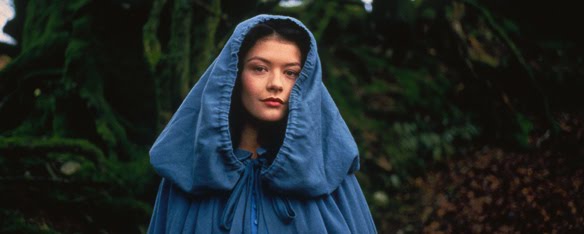
Every once in a great while you read a novel that just knocks you back onto your keister. Well, for me, this was just one of those novels. I finished reading Thomas Hardy's The Return of the Native several days ago, and it made such an impression upon me that I turned to page one, and began it all over again! The first impression? Wow! Upon finishing it for the second time? I concur with the first impression.
This is the fourth in Hardy's series of eight 'Wessex' novels, all being set in his native countryside of southwestern England. Originally, The Return of the Native was serialized in twelve monthly installments in Belgravia magazine in 1878. Interestingly, Belgravia magazine was edited by Mary Elizabeth Braddon (of Lady Audley's Secret fame) and her husband, John Maxwell.
The Return of the Native takes place over the course of a year and one-day, and the setting of the novel is entirely on the fictional Egdon Heath of Hardy's Wessex. In fact, Egdon Heath with its rolling hills and dense warrens of scrubby, spiny, and brown furze should absolutely be considered one of the main characters listed in the novel's Dramatis Personae.
The novel, as Hardy originally intended and envisioned, is a tragedy in five parts; however, he was persuaded by the editors, for serialization purposes, to add a final sixth book (Aftercourses). Hardy even includes a disclaimer at the start of this sixth book suggesting that the reader choose the ending for the novel that he or she deems appropriate. Hardy was not a fan of adding the sixth book to the novel.
The first fifty pages, or so, of the novel feels like something out of the Britain of the Druids. Hardy's description of the Egdon Heath, the late fall weather, and the magical, almost pagan, customs of the people surrounding their bonfires next to the ancient Celtic barrows on the night of November Fifth was simply spell-binding. And it just gets better!
Early on we are introduced to the novel's primary protagonists. There's the seemingly-Mephistophelean Diggory Venn, the Reddleman, covered in red, from head-to-toe in the ochre he uses to mark the flocks of sheep; the beautiful and good-hearted Thomasin Yeobright; the handsome 'failed' engineer, now inn-owner, Damon Wildeve; the solid and steady matron of the heath, Mrs. Yeobright; the 'Queen of Night,' the darkly beautiful 'wayward and erring heroine,' Eustacia Vye ("to be loved to madness, was her great desire"); and, finally, the 'Native,' who has returned to the heath, the only child of Mrs. Yeobright, Clym Yeobright. The novel travels through the four seasons of the year with these six characters locked together in a tale of passion, drama, pathos, and tragedy where, in typical Hardyian fashion, only Fate, Chance, and Irony exert any control whatsoever. Like a moth is drawn to a flame, the reader is inexorably drawn into the tale, and recognizes with a growing horror that a full release can only be attained through reaching and experiencing the novel's shocking climax.
The novel contains more than a superficial nod to the great choric scenes of the Greek Tragedies, and includes the gatherings of commoners like many of Shakespeare's dramas. Hardy's characters' dialog is spare and clipped, but each word is chosen carefully and packs an emotional wallop. The descriptions of the environment, the role of the humans in it, and the interactions between the characters reminds me of the great modern American novelist, Cormac McCarthy. The Return of the Native is Hardy's Naturalism at its finest; and becomes an almost poetic homage to the interaction of the human species with one another as well as with the Earth Mother herself.
Hardy chose an ode from Keats's epic Endymion as an epigraph to lead off the novel. Nothing could describe this novel better--
"To sorrow
I bade good morrow,
And thought to leave her far away behind;
But cheerly, cheerly,
She loves me dearly;
She is so constant to me, and so kind.
I would deceive her,
And so leave her,
But ah! she is so constant and so kind."
(Endymion, Book IV, 1817)
***
Finally, I want share one of Thomas Hardy's poems that directly speaks to his beautiful novel, The Return of the Native. This poem is entitled, The Moth Signal--
The Moth-Signal
(On Egdon Heath)
'What are you still, still thinking,
He asked in vague surmise,
'That you stare at the wick unblinking
With those great lost luminous eyes?'
'O, I see a poor moth burning
In the candle-flame,' said she,
'Its wings and legs are turning
To a cinder rapidly.'
'Moths fly in from the heather,'
He said, 'now the days decline.'
'I know,' said she. 'The weather,
I hope, will at last be fine.
'I think,' she added lightly,
'I'll look out at the door.
The ring the moon wears nightly,
May be visible now no more.
She rose, and, little heeding,
Her husband then went on
With his attentive reading
In the annals of ages gone.
Outside the house a figure
Came from the tumulus near,
And speedily waxed bigger,
And clasped and called her Dear.
'I saw the pale-winged token
You sent through the crack,' sighed she.
'That moth is burnt and broken
With which you lured out me.
'And were I as the moth is
It might be better far
For one whose marriage troth is
Shattered as potsherds are!'
Then grinned the Ancient Briton
From the tumulus treed with pine:
'So, hearts are thwartly smitten
In these days as in mine!'
[Published in Satires of Circumstance, 1914]
pro se = L. "for oneself."
prose = L. 'prosa.' the ordinary language people use is speaking or writing: a prosaic style, quality, or condition.
The Journal of My Travels through the World's Great Literature
June 29, 2010
Meme: Teaser Tuesdays
TEASER TUESDAYS asks you to:
- Grab your current read
- Open to a random page
- Share two (2) “teaser” sentences from somewhere on that page
- BE CAREFUL NOT TO INCLUDE SPOILERS! (make sure that what you share doesn’t give too much away! You don’t want to ruin the book for others!)
- Share the title & author, too, so that other TT participants can add the book to their TBR Lists if they like your teasers!
My teaser is:
"Stepping forward in this direction yet a little further, he could see the tower of West Endelstow Church, beneath which he was to meet his Elfride that night. And at the same time he noticed, coming over the hill from the cliffs, a white speck in motion."
This was taken from page 180 of my current read, A Pair of Blue Eyes, by Thomas Hardy (Wordsworth Classics edition). This is considered to be the second in his series of 'Wessex' novels, and was the first published under his own name in 1873. It is also considered quasi-autobiographical, reflecting some of the experiences associated with the courtship of his future wife, Emma Gifford. It was from this novel that the literary term "cliff hanger" was presumed to have originated.
[The rules for Teaser Tuesdays comes from MizB at Should Be Reading]
- Grab your current read
- Open to a random page
- Share two (2) “teaser” sentences from somewhere on that page
- BE CAREFUL NOT TO INCLUDE SPOILERS! (make sure that what you share doesn’t give too much away! You don’t want to ruin the book for others!)
- Share the title & author, too, so that other TT participants can add the book to their TBR Lists if they like your teasers!
My teaser is:
"Stepping forward in this direction yet a little further, he could see the tower of West Endelstow Church, beneath which he was to meet his Elfride that night. And at the same time he noticed, coming over the hill from the cliffs, a white speck in motion."
This was taken from page 180 of my current read, A Pair of Blue Eyes, by Thomas Hardy (Wordsworth Classics edition). This is considered to be the second in his series of 'Wessex' novels, and was the first published under his own name in 1873. It is also considered quasi-autobiographical, reflecting some of the experiences associated with the courtship of his future wife, Emma Gifford. It was from this novel that the literary term "cliff hanger" was presumed to have originated.[The rules for Teaser Tuesdays comes from MizB at Should Be Reading]
June 28, 2010
Review: "Under the Greenwood Tree" By Thomas Hardy
If you're looking for an enjoyable and relatively quick summer read, I highly recommend Thomas Hardy's Under the Greenwood Tree or The Mellstock Quire: A Rural Painting of the Dutch School. This delightful little novel is one of the more bucolic and pastoral novels I've read in some time, and depicts the disappearing rural life of Hardy's southwestern England. This novel was first published in 1872, and was the last of his work published anonymously. This novel is considered the first of Hardy's great 'Wessex' novels, and was followed by: Far From the Madding Crowd (1874), The Return of the Native (1878), The Mayor of Casterbridge (1886), The Woodlanders (1887), Tess of the d'Urbervilles (1891), and the monumental Jude the Obscure (1895), that ended up being Hardy's last work of fiction (he devoted himself to his poetry from this point until his death in 1928).
Without giving anything away, let me say that the plot of Under the Greenwood Tree revolves around two stories. The first is the lovely story of the small group of men who comprise the Mellstock Quire (choir) and the music that they provide to the small parish church and for dances, weddings, and other community gatherings and celebrations during the course of the year. The novel is arranged in five parts, and the first four represent the seasons of Winter, Spring, Summer, and Autumn, and Hardy describes the role of music in each. I especially loved the first part--Winter--with the quire walking through the forests and fields on a snowy Christmas Eve, and stopping to carol at each house in the county. Of course, time marches on, and changes are suggested, and these changes will affect the men of the quire and their relationship with the community.
The second plot that proceeds breezily through the novel is the romantic entanglements that arise with the arrival of the new school-mistress, the young Miss Fancy Day. Almost immediately there are three eligible suitors vying for her hand in marriage, and Hardy does a delightful job of leading the reader through the seasons of the year as we follow the progress of the lovers that finally culminates with a wedding "where music, dancing, and the singing of songs went forward with great spirit throughout the evening."
I loved Hardy's use of the local Dorsetshire dialect in his characters' dialog, and mixed with his almost poetic descriptions of the rural environment and the seasons, the novel imparts the comfortable nostalgia of a daydream on a warm summer afternoon whilst reclining against the bole of an old oak tree on the side of hill. If you love Thomas Hardy, or just want a simple and effective plot, with some very good writing; this gentle and idyllic short novel is tailor-made for you. When you are done, pass it on to a friend, they'll appreciate it and you. I loved this novel, and will certainly read it again; and maybe read the first section aloud at a Christmas gathering some time.
My review was based upon the Wordsworth Classics soft-cover edition, published in 1994, 146 pages.
Without giving anything away, let me say that the plot of Under the Greenwood Tree revolves around two stories. The first is the lovely story of the small group of men who comprise the Mellstock Quire (choir) and the music that they provide to the small parish church and for dances, weddings, and other community gatherings and celebrations during the course of the year. The novel is arranged in five parts, and the first four represent the seasons of Winter, Spring, Summer, and Autumn, and Hardy describes the role of music in each. I especially loved the first part--Winter--with the quire walking through the forests and fields on a snowy Christmas Eve, and stopping to carol at each house in the county. Of course, time marches on, and changes are suggested, and these changes will affect the men of the quire and their relationship with the community.
The second plot that proceeds breezily through the novel is the romantic entanglements that arise with the arrival of the new school-mistress, the young Miss Fancy Day. Almost immediately there are three eligible suitors vying for her hand in marriage, and Hardy does a delightful job of leading the reader through the seasons of the year as we follow the progress of the lovers that finally culminates with a wedding "where music, dancing, and the singing of songs went forward with great spirit throughout the evening."
I loved Hardy's use of the local Dorsetshire dialect in his characters' dialog, and mixed with his almost poetic descriptions of the rural environment and the seasons, the novel imparts the comfortable nostalgia of a daydream on a warm summer afternoon whilst reclining against the bole of an old oak tree on the side of hill. If you love Thomas Hardy, or just want a simple and effective plot, with some very good writing; this gentle and idyllic short novel is tailor-made for you. When you are done, pass it on to a friend, they'll appreciate it and you. I loved this novel, and will certainly read it again; and maybe read the first section aloud at a Christmas gathering some time.
My review was based upon the Wordsworth Classics soft-cover edition, published in 1994, 146 pages.
June 25, 2010
Friday's Philology
Twice, maybe thrice, I have encountered the word "perfervid" used in Thomas Hardy's beautiful novel, The Return of the Native (1878). Hardy uses the word, each time, in describing the actions or thoughts of one of his protagonists, the beautiful, dark-haired and -eyed, Miss Eustacia Vye.
perfervid - (Literary & Literary Critical Terms) Literary extremely ardent, enthusiastic, or zealous
[from New Latin perfervidus, from Latin per- (intensive) + fervidus fervid]
perfervid - characterized by intense emotion; "ardent love"; "an ardent lover"; "a fervent desire to change society"; "a fervent admirer"; "fiery oratory"; "an impassioned appeal"; "a torrid love affair."
Anyone who has read The Return of the Native will undoubtedly see that this word certainly applies to Eustacia Vye, 'The Queen of Night.' Hardy describes Eustacia with the following words, "To be loved to madness--such was her great desire." That must be perfervidness!
Say the word perfervid out loud, and feel it on your tongue and lips. To me, the word just becomes an evocative portrait of passion and ardent desire. Cool, huh?
[The photograph used in this posting is of the actress, Catherine Zeta Jones, who played 'Eustacia Vye' in the 1994 Hallmark Hall of Fame production of Hardy's The Return of the Native]
perfervid - characterized by intense emotion; "ardent love"; "an ardent lover"; "a fervent desire to change society"; "a fervent admirer"; "fiery oratory"; "an impassioned appeal"; "a torrid love affair."
Anyone who has read The Return of the Native will undoubtedly see that this word certainly applies to Eustacia Vye, 'The Queen of Night.' Hardy describes Eustacia with the following words, "To be loved to madness--such was her great desire." That must be perfervidness!
Say the word perfervid out loud, and feel it on your tongue and lips. To me, the word just becomes an evocative portrait of passion and ardent desire. Cool, huh?
[The photograph used in this posting is of the actress, Catherine Zeta Jones, who played 'Eustacia Vye' in the 1994 Hallmark Hall of Fame production of Hardy's The Return of the Native]
June 17, 2010
Review: "The Mill on the Floss" By George Eliot

Upon completion of the The Mill on the Floss, I realized that I had just finished something monumental—a staggeringly amazing literary achievement. This novel, written by ‘George Eliot’ (Mary Anne, or Marian Evans), and first published by Blackwood and Sons in 1860, could have just as easily been titled, “Pride and Prejudice” had not that title been put to use already. Some twenty-four hours after finishing this book, I am coming to the conclusion that Eliot may, in fact, represent the absolute pinnacle of writing in the Victorian Age. This is not, in any way, shape, or form, a “Silly novel by a Lady Novelist” (see Eliot’s essay “Silly Novels by Lady Novelists,” Westminster Review, October 1856). This novel is not of the “mind-and-millinery,” “rank-and-beauty,” or of the “enigmatic” species. This is a novel in the finest tradition of Realism, and I can’t help but think that it must have inspired the later Naturalism of Thomas Hardy and his ‘Wessex’ novels.
This book should really be required reading for parents and brothers and sisters. The story of the young Maggie Tulliver, and her relationship with her older brother Tom and her parents is compelling, and is one that we can all relate at so many levels. It warns us that actions, things said, or beliefs instilled upon the young can have profound implications for years to come.
I suppose in some respects that The Mill on the Floss can also be considered to be the bildungsroman of Maggie Tulliver as Eliot clearly focuses on the psychological and moral growth of Maggie, her main protagonist, from when she was a little girl until she has become a young-adult. It is the ability (or inability) of Maggie to adapt to changes in her own life, and the lives of those she loves around her, that provides the main premise of the narrative. In the spirit of full disclosure, I began to fall in love with Maggie early on in the novel, and loved her more with each page that I turned.
In my opinion, Maggie Tulliver is one of the most engaging and endearing heroines that a reader will encounter in Victorian fiction. Eliot’s raven-haired and dark-eyed beautiful creation manages to combine the goodness, sensitivity, and natural curiosity of Elizabeth Gaskell’s ‘Molly Gibson;’ the spirit and independence of Charles Dickens’s ‘Bella Wilfur;’ and the wit and humor of Jane Austen’s ‘Elizabeth Bennet.’ Maggie Tulliver has a heart the size of the sun, nearly as bright, and burns just as hotly. She wants to please everyone, all of the time; and it is this propensity to love and be loved that leads to her troubles. Mostly though, Maggie desires more than anything to please her older brother Tom; and, in return, to be unconditionally loved by him.
We see an example of Maggie’s spiritual and emotional maturation in her heart-felt and frank discussion with Stephen Guest, a young man who has fallen head-over-heels in love with her, even though he is essentially ‘promised’ to Maggie’s cousin, Lucy Deane:
“She was silent for a few moments, with her eyes fixed on the ground; then she drew a deep breath, and said, looking up at him with solemn sadness—
“O it is difficult—life is very difficult! It seems right to me sometimes that we should follow our strongest feeling—but then, such feelings continually come across the ties that all our former life has made for us—the ties that have made others dependent on us—and would have cut them in two. If life were quite easy and simple, as it might have been in paradise, and we could always see that one being first towards whom… I mean, if life did not make duties for us before love comes, love would be a sign that two people ought to belong to each other. But I see—I feel it is not so now: there are things we must renounce in life; some of us must resign love. Many things are difficult and dark to me; but I see one thing quite clearly—that I must not, cannot, seek my own happiness by sacrificing others. Love is natural; but surely pity and faithfulness and memory are natural too. And they would live in me still, and punish me if I did not obey them. I should be haunted by the suffering I had caused. Our love would be poisoned. Don’t urge me; help me—help me, because I love you.”
--These are the words of a young woman that has finally found herself, and has reconciled the passionate and intellectual sides of her spirit. Arguably one of the most eloquent and beautiful passages I’ve read in some time.
Finally, like Dickens does with the Thames River in his magnum opus, Our Mutual Friend, Eliot weaves the theme of The Floss, the river that binds together the peoples and the landscape of Maggie’s world, through the novel with her use of metaphor and allusion, and pastoral description. The novel starts with The Floss, and through the course of the book it is always there, relentlessly flowing to the sea. In some respects, The Floss represents the things we say, feelings we have, or actions we take that get away from us; sometimes ‘flowing’ past us, becoming irretrievable and lost forever. Ultimately, it is this connection with The Floss that Eliot masterfully uses to bring her readers to the close of this magnificent novel culminating in the great climax that finally defeats pride and prejudice and brings Maggie the redemption she longs for.
“The Mill on the Floss” is a towering masterpiece—a novel for the ages.
June 12, 2010
Review: "Villette" by Charlotte Bronte
I cry in anguish, "Oh Villette, Villette, Villette!"
It was a feeling that came upon me as I read this novel; the palpable feeling of—
The cold grey storms of the fall and winter, the relentless building winds, the rain pounding against the window—those dark and dreary days of loneliness—all of the losses have brought you a smothering and almost overwhelming mantle of grief. You see, and write of, the Love around you, but feel the throbbing ache, day after day, night after night, of never receiving Love in return.
I lost count of the tears that fell as I read your account, Miss Lucy Snowe; or, should I call you, Miss Charlotte?
This novel, this Villette, like an arrow fletched fair, flew true, oh so true, and pierced your beating heart; and from that mortal wound poured the secrets of your soul, your inner-most being; laid bare for all to see. The incalculable loss of your older sisters, then Branwell, your dearest Emily, and finally quiet little Anne. This towering testament to loneliness, to sorrow, swept me, your Reader, relentlessly through the unimagined torrent of your human emotions—your grief, your fears, your reserved passion, your quiet grace, steadfast loyalty, and your resolute strength.
I felt guilty as I read, Little Woman, looking over my shoulder at every pause; afraid that you should find me picking the lock of your secret diary; spellbound as I turned the pages, one after the other, reading your most intimate, personal, and painful thoughts and the passionate feelings that poured forth onto the page. Intensely captivated by the dialog between your Passion and your Reason, the conversations between your Imagination and your Matter; but I read on. Until it became too much; I averted my eyes, and I wept.
As I sit here, writing these words, I am absolutely overwhelmed. I don’t know that I have ever read a book that has moved me quite like Charlotte Bronte’s final novel, Villette. A timeless and moving experience from its first words, to its final “Farewell.”
I am without words, Little Woman. I know this though, Miss Lucy Snowe, Miss Charlotte Bronte, I shall Love you always.
In tribute to the commitment you made to all who have read, or will read, this personal ‘Testament’ of yours over the ages, may your own words prove prophetic—
Farewell, Little Woman, fare thee well.
Read this novel! It is intensely autobiographical, and probably gives the reader much more insight into the mind, heart, and soul of Charlotte Bronte than the biographies written by Elizabeth Gaskell (1857) and Margaret Lane (1953), or the numerous scholarly works that have been written and published. This was an amazing book. Highly recommended
The cold grey storms of the fall and winter, the relentless building winds, the rain pounding against the window—those dark and dreary days of loneliness—all of the losses have brought you a smothering and almost overwhelming mantle of grief. You see, and write of, the Love around you, but feel the throbbing ache, day after day, night after night, of never receiving Love in return.I lost count of the tears that fell as I read your account, Miss Lucy Snowe; or, should I call you, Miss Charlotte?
This novel, this Villette, like an arrow fletched fair, flew true, oh so true, and pierced your beating heart; and from that mortal wound poured the secrets of your soul, your inner-most being; laid bare for all to see. The incalculable loss of your older sisters, then Branwell, your dearest Emily, and finally quiet little Anne. This towering testament to loneliness, to sorrow, swept me, your Reader, relentlessly through the unimagined torrent of your human emotions—your grief, your fears, your reserved passion, your quiet grace, steadfast loyalty, and your resolute strength.
I felt guilty as I read, Little Woman, looking over my shoulder at every pause; afraid that you should find me picking the lock of your secret diary; spellbound as I turned the pages, one after the other, reading your most intimate, personal, and painful thoughts and the passionate feelings that poured forth onto the page. Intensely captivated by the dialog between your Passion and your Reason, the conversations between your Imagination and your Matter; but I read on. Until it became too much; I averted my eyes, and I wept.
As I sit here, writing these words, I am absolutely overwhelmed. I don’t know that I have ever read a book that has moved me quite like Charlotte Bronte’s final novel, Villette. A timeless and moving experience from its first words, to its final “Farewell.”
I am without words, Little Woman. I know this though, Miss Lucy Snowe, Miss Charlotte Bronte, I shall Love you always.
In tribute to the commitment you made to all who have read, or will read, this personal ‘Testament’ of yours over the ages, may your own words prove prophetic—
Proof of a life to come must be given. In fire and in blood do we trace the record throughout nature. In fire and in blood does it cross our own experience. Sufferer, faint not through terror of this burning evidence. Tired wayfarer, gird up thy loins, look upward, march onward. Pilgrims and brother mourners, join in friendly company. Dark through the wilderness of this world stretches the way for most of us; equal and steady be our tread; be our cross our banner. For staff we have His promise, whose ‘word is tried, whose way is perfect:’ for present hope His providence, ‘who gives the shield of salvation, whose gentleness makes great;’ for final home His bosom, who ‘dwells in the height of Heaven;’ for crowning prize a glory, exceeding and eternal.”
Farewell, Little Woman, fare thee well.
Read this novel! It is intensely autobiographical, and probably gives the reader much more insight into the mind, heart, and soul of Charlotte Bronte than the biographies written by Elizabeth Gaskell (1857) and Margaret Lane (1953), or the numerous scholarly works that have been written and published. This was an amazing book. Highly recommended
June 5, 2010
Summer Reads & Reviews--Part One
I just returned from a four-day business trip to Cheyenne, Wyoming. I had a great time seeing a lot of my peers and enjoying the seasonable weather of the northern Great Plains. Cheyenne is the capitol of Wyoming and has fully embraced its history and heritage as a railroad town in the wild west. If you are in the neighborhood, stop in and have a visit.
I also took a small collection of books with me, and with all of the airport, airplane, and quiet evenings, I had plenty of time to finish a couple of really terrific books. Both books, in my opinion, make great summer reading. They are light, well-written, and easy to read, and very enjoyable. The first book that I read was Miss Marjoribanks by the Victorian author, Mrs. Margaret Oliphant. I loved it! Here's my review --
This is a d
elightful, elegant, and refreshingly witty novel. Until reading Miss Marjoribanks, I’d not read anything by Margaret Oliphant before. I will certainly try and find more of her “The Chronicles of Carlingford.” It has been said that this is novel is much like Jane Austen’s Emma; well, I can absolutely appreciate the comparison. If anything, Miss Lucilla Marjoribanks is even more confident, self-assured, and imperious than Miss Emma Woodhouse. Miss Marjoribanks is a no-nonsense, take-no-prisoners, and superbly organized and generous young woman whose stated object in life is “to be a comfort to her dear papa.” While oft-stated, this personal and altruistic mantra seems to guide all of Lucilla’s decision-making and activities in Carlingford as well as the other families of Grange Lane, I believe that this desire to make her father’s life comfortable also empowers Lucilla with moral authority, and a rationalization that liberates her to organize and efficiently implement her brand of ‘society’ among the upper middle class of Carlingford. Lucilla Marjoribanks is the consummate organizer, schemer, and is fiercely independent when it comes to ruling her little kingdom; but she’s very careful to ensure that she stays within the proscribed bounds of the rules for proper society.
The novel is largely the story of the ten years that Lucilla spends as the ‘lady’ of her father’s house following the death of her mother and the finishing of her education at the Mount Pleasant school for young ladies. Effective almost immediately, upon her assumption of the throne, Lucilla begins holding regular Thursday “Evenings” (“not parties”) whereby Carlingford’s gentry attend dinner at Dr. Marjoribanks table and several hours of music and conversation in Lucilla’s newly remodeled parlor. Lucilla, in the role of conductor, orchestrates and directs everything from the guest list, dress-code (“white frocks, high”), dinner menu, parlor seating arrangements, and even the subjects of conversations discussed.
This novel was originally serialized in Blackwood’s Edinburgh Magazine (a monthly literary magazine) from February 1865 through May 1866. As I read the novel, I could sense the pulse and rhythm of the serial presentation of the novel’s plot, with each little vignette being well-structured and building up to a mini-climax or posing a question involving mystery or intrigue. Oliphant introduces her Carlingford characters with a deft touch. Whether they are some of the older ladies of town who have their noses in everything; or the two proudly independent and slightly insecure Lake sisters (the ‘contralto’ and the little ‘preraphaelite’), daughters of the drawing master; or the town ‘mimic,’ Mrs. Woodburn, and her mysterious brother, Harry Cavendish; or Archdeacon Beverly and the widow, Mrs. Mortimer; they are all the grist that Lucilla kindly, but firmly, grinds in her effort to shape Carlingford society. It is great stuff to watch Lucilla assert her mastery and control over each of them; but not in an egotistical or obsequious fashion, but done in a manner that makes each of them feel like it is the right thing to do. Sure, Lucilla, at times, makes mistakes in her dealings with Carlingsford’s folk; but she quickly recognizes these faults and does try to make all well in the end. After a time, I began to realize that Carlingford was waiting for someone like Lucilla to come along and take charge – she is the captain of the ship with her hand firmly on the tiller.
There is a great plot twist near the novel’s end, though not altogether unexpected, and it certainly staggers Lucilla, but doesn’t knock her down. Her own inner strength and the outward calm she displays is more than impressive, but it is also consistent with her upbringing, her education, and perhaps the Victorian ideal of how women were expected to behave. While I believe that Mrs. Oliphant has created a bit of a humorous social satire in Miss Marjoribanks, I also believe that Lucilla’s character was important in showing that women of that time could be confident and competent independent thinkers, and could very capably assume the mantle of the clear-headed leader within her society.
Getting back to comparisons with other literary heroines; in 1969, Q.D. Leavis said about Lucilla Marjoribanks that she was the “triumphant intermediary” between Austen’s ‘Emma Woodhouse’ and George Eliot’s ‘Dorothea Brooke’ and found her “incidentally, more entertaining, more impressive and more likeable than either.” This is pretty high praise in my opinion, and I have to say that I wholeheartedly agree. During the course of the novel I came to very much like and admire Lucilla Marjoribanks; and, in fact, I came to like Lucilla even better than I have ever liked ‘Emma Woodhouse.’ I also have to think that the satirical novelist, E.F. Benson, must have looked to Oliphant and her “Lucilla Marjoribanks’ as he began to develop his great character, the magnificent 'Mrs. Emmeline Lucas,' the 'Great Lucia' of the “Mapp and Lucia” series of novels.
I loved reading this novel, and unhesitatingly recommend it. In my opinion, it most certainly belongs in the Victorian canon. Miss Marjoribanks is very well-written, entertaining, engaging, funny and has significant elements of drama and mystery. This is a wonderful book, and once started it is hard to put down. If you’re looking for a fun summer read, go take a visit to Carlingford and spend a few ‘Evenings’ with the lovely Lucilla Marjoribanks. You won’t regret it.
***
The second book that I read was a non-fiction book by Christopher Benfey, a professor of English at Mount Holyoke College in South Hadley, Massachusetts. His book, entitled, A Summer of Hummingbirds: Love, Art, and Scandal in the Intersecting Worlds of Emily Dickinson, Mark Twain, Harriet Beecher Stowe, and Martin Johnson Heade, was a great little find, and I absolutely enjoyed every minute of reading it.

I found this very well-written and interesting book the other day on the bargain table at my local Barnes & Noble bookstore. Christopher Benfey’s A Summer of Hummingbirds, while just a touch over 250 pages in length, is a fascinating look at a series of seemingly unconnected historical events involving a group of prominent literary, theological, scientific, and artistic Americans during the late-1860s through the 1880s. Interestingly, what seems to link these persons together was their unmitigated passion for hummingbirds!
As Dr. Benfey writes, “they wrote poems and stories about hummingbirds; they painted pictures of hummingbirds; they tamed wild hummingbirds and collected stuffed hummingbirds; they set music to the humming of hummingbirds; they waited impatiently through the winter months for the hummingbirds’ return.” Dr. Benfey puts forward the proposition that this fascination was one result of the great tragic, but ultimately liberating, experience of the American Civil War. Benfey believes that “Americans during and after the Civil War gradually left behind a static view of existence, a trust in fixed arrangements and hierarchies. In science and in art, in religion and in love, they came to see a new dynamism and movement in their lives, a brave new world of instability and evanescence. This dynamism, in all aspects of life, found perfect expression in the hummingbird.”
The book kicks off with Thomas Wentworth Higginson and his black Union soldiers near Jacksonville, Florida, during the American Civil War. Before his military service began, Higginson wrote an essay entitled, The Life of Birds, that was published in The Atlantic in 1862. He began the essay with a long look at hummingbirds which, in his words, were “an image of airy motion,” and wondered if “gems turn to flowers, flowers to feathers, in that long-past dynasty of the humming-birds?” A fanciful nod to Darwinism, perhaps.
Higginson, during the war years, was already corresponding with Emily Dickinson, the shy and reclusive brilliant poet of Amherst, Massachusetts. In fact, in 1862, Dickinson sent three poems to Higginson for his opinion and asked if they had the potential for publication. Dickinson, it seems, was inspired by Higginson’s nature essays to begin writing poems about hummingbirds, including this example:
“Within my Garden, rides a Bird
Upon a single Wheel—
Whose spokes a dizzy Music make
As ‘twere a traveling Mill—
He never stops, but slackens
Above the Ripest Rose—
Partakes without alighting
And praises as he goes”
I learned some interesting new things about Emily Dickinson, Henry Ward Beecher, his sister, Harriet Beecher Stowe (the author of Uncle Tom's Cabin), Mabel Loomis Todd, and Thomas Wentworth Higginson. To me though, I was most intrigued with Martin Johnson Heade. Heade was an artist, largely a landscape painter, of the American mid-19th century “Hudson River School;” that also produced artists like Thomas Cole, Thomas Moran, and Albert Bierstadt. Heade loved painting nature and the wildlife that lived in it. It appears that he also had a bit of wanderlust in him as he traveled all over the globe in pursuit of practicing his art. He particularly loved to paint hummingbirds in their natural habitats, and visited Central and South America in pursuit of these little flying jewels. Many prominent Americans, including Samuel Clemens (Mark Twain) owned paintings by Heade.
Generally, the book gives a wonderful overview of each of these amazing people and what made them important in their own time. The real point of the book though, in my opinion, is Dr. Benfey’s contention that there was a convergence, of sorts, of most of these people in and around Amherst, Massachusetts from the mid-1870s to the mid-1880s, for a variety of reasons. I really don’t want to give anything away, but there are some really interesting and juicy tid-bits concerning Henry Ward Beecher, Austin Dickinson, the beautiful and talented artist Mabel Loomis Todd, Martin Johnson Heade, and Emily Dickinson.
Benfey’s book then, in a sense, is really a ‘string-of-pearls’ of connected, or quasi-connected, relationships among the book’s principals. These relationships occur over the twenty-year period following the Civil War, the so-called 'great American Golden Age,' and culminate with Henry Flagler’s promotion and development of Florida as a winter travel destination. As I mentioned above, the book starts in Florida with Higginson; it goes full-circle and ends in Florida with Flagler and Heade and Flagler's fabulous resort hotel in St. Augustine, Florida.
This was a very thought-provoking and fun book to read. I have to say that learning more about Emily Dickinson, the person and woman, has increased my appreciation of the brilliance and genius of her amazing poetry. Getting to know her brother Austin, and sister-in-law, Susan, and her friends David and Mabel Todd was an added bonus. Discovering Martin Johnson Heade’s life and paintings was fantastic, as I am a huge fan of the Hudson River School, landscape art in general, and especially paintings of birds. Finally, the book includes an excellent collection of end-notes and a superb index. This is a fast read and will make a wonderful addition to anyone’s American literature bookshelf. I highly recommend Dr. Benfey’s A Summer of Hummingbirds.
Stay tuned, there's more Summer Reading to come!
I also took a small collection of books with me, and with all of the airport, airplane, and quiet evenings, I had plenty of time to finish a couple of really terrific books. Both books, in my opinion, make great summer reading. They are light, well-written, and easy to read, and very enjoyable. The first book that I read was Miss Marjoribanks by the Victorian author, Mrs. Margaret Oliphant. I loved it! Here's my review --
This is a d
elightful, elegant, and refreshingly witty novel. Until reading Miss Marjoribanks, I’d not read anything by Margaret Oliphant before. I will certainly try and find more of her “The Chronicles of Carlingford.” It has been said that this is novel is much like Jane Austen’s Emma; well, I can absolutely appreciate the comparison. If anything, Miss Lucilla Marjoribanks is even more confident, self-assured, and imperious than Miss Emma Woodhouse. Miss Marjoribanks is a no-nonsense, take-no-prisoners, and superbly organized and generous young woman whose stated object in life is “to be a comfort to her dear papa.” While oft-stated, this personal and altruistic mantra seems to guide all of Lucilla’s decision-making and activities in Carlingford as well as the other families of Grange Lane, I believe that this desire to make her father’s life comfortable also empowers Lucilla with moral authority, and a rationalization that liberates her to organize and efficiently implement her brand of ‘society’ among the upper middle class of Carlingford. Lucilla Marjoribanks is the consummate organizer, schemer, and is fiercely independent when it comes to ruling her little kingdom; but she’s very careful to ensure that she stays within the proscribed bounds of the rules for proper society.The novel is largely the story of the ten years that Lucilla spends as the ‘lady’ of her father’s house following the death of her mother and the finishing of her education at the Mount Pleasant school for young ladies. Effective almost immediately, upon her assumption of the throne, Lucilla begins holding regular Thursday “Evenings” (“not parties”) whereby Carlingford’s gentry attend dinner at Dr. Marjoribanks table and several hours of music and conversation in Lucilla’s newly remodeled parlor. Lucilla, in the role of conductor, orchestrates and directs everything from the guest list, dress-code (“white frocks, high”), dinner menu, parlor seating arrangements, and even the subjects of conversations discussed.
This novel was originally serialized in Blackwood’s Edinburgh Magazine (a monthly literary magazine) from February 1865 through May 1866. As I read the novel, I could sense the pulse and rhythm of the serial presentation of the novel’s plot, with each little vignette being well-structured and building up to a mini-climax or posing a question involving mystery or intrigue. Oliphant introduces her Carlingford characters with a deft touch. Whether they are some of the older ladies of town who have their noses in everything; or the two proudly independent and slightly insecure Lake sisters (the ‘contralto’ and the little ‘preraphaelite’), daughters of the drawing master; or the town ‘mimic,’ Mrs. Woodburn, and her mysterious brother, Harry Cavendish; or Archdeacon Beverly and the widow, Mrs. Mortimer; they are all the grist that Lucilla kindly, but firmly, grinds in her effort to shape Carlingford society. It is great stuff to watch Lucilla assert her mastery and control over each of them; but not in an egotistical or obsequious fashion, but done in a manner that makes each of them feel like it is the right thing to do. Sure, Lucilla, at times, makes mistakes in her dealings with Carlingsford’s folk; but she quickly recognizes these faults and does try to make all well in the end. After a time, I began to realize that Carlingford was waiting for someone like Lucilla to come along and take charge – she is the captain of the ship with her hand firmly on the tiller.
There is a great plot twist near the novel’s end, though not altogether unexpected, and it certainly staggers Lucilla, but doesn’t knock her down. Her own inner strength and the outward calm she displays is more than impressive, but it is also consistent with her upbringing, her education, and perhaps the Victorian ideal of how women were expected to behave. While I believe that Mrs. Oliphant has created a bit of a humorous social satire in Miss Marjoribanks, I also believe that Lucilla’s character was important in showing that women of that time could be confident and competent independent thinkers, and could very capably assume the mantle of the clear-headed leader within her society.
Getting back to comparisons with other literary heroines; in 1969, Q.D. Leavis said about Lucilla Marjoribanks that she was the “triumphant intermediary” between Austen’s ‘Emma Woodhouse’ and George Eliot’s ‘Dorothea Brooke’ and found her “incidentally, more entertaining, more impressive and more likeable than either.” This is pretty high praise in my opinion, and I have to say that I wholeheartedly agree. During the course of the novel I came to very much like and admire Lucilla Marjoribanks; and, in fact, I came to like Lucilla even better than I have ever liked ‘Emma Woodhouse.’ I also have to think that the satirical novelist, E.F. Benson, must have looked to Oliphant and her “Lucilla Marjoribanks’ as he began to develop his great character, the magnificent 'Mrs. Emmeline Lucas,' the 'Great Lucia' of the “Mapp and Lucia” series of novels.
I loved reading this novel, and unhesitatingly recommend it. In my opinion, it most certainly belongs in the Victorian canon. Miss Marjoribanks is very well-written, entertaining, engaging, funny and has significant elements of drama and mystery. This is a wonderful book, and once started it is hard to put down. If you’re looking for a fun summer read, go take a visit to Carlingford and spend a few ‘Evenings’ with the lovely Lucilla Marjoribanks. You won’t regret it.
***
The second book that I read was a non-fiction book by Christopher Benfey, a professor of English at Mount Holyoke College in South Hadley, Massachusetts. His book, entitled, A Summer of Hummingbirds: Love, Art, and Scandal in the Intersecting Worlds of Emily Dickinson, Mark Twain, Harriet Beecher Stowe, and Martin Johnson Heade, was a great little find, and I absolutely enjoyed every minute of reading it.

I found this very well-written and interesting book the other day on the bargain table at my local Barnes & Noble bookstore. Christopher Benfey’s A Summer of Hummingbirds, while just a touch over 250 pages in length, is a fascinating look at a series of seemingly unconnected historical events involving a group of prominent literary, theological, scientific, and artistic Americans during the late-1860s through the 1880s. Interestingly, what seems to link these persons together was their unmitigated passion for hummingbirds!
As Dr. Benfey writes, “they wrote poems and stories about hummingbirds; they painted pictures of hummingbirds; they tamed wild hummingbirds and collected stuffed hummingbirds; they set music to the humming of hummingbirds; they waited impatiently through the winter months for the hummingbirds’ return.” Dr. Benfey puts forward the proposition that this fascination was one result of the great tragic, but ultimately liberating, experience of the American Civil War. Benfey believes that “Americans during and after the Civil War gradually left behind a static view of existence, a trust in fixed arrangements and hierarchies. In science and in art, in religion and in love, they came to see a new dynamism and movement in their lives, a brave new world of instability and evanescence. This dynamism, in all aspects of life, found perfect expression in the hummingbird.”
The book kicks off with Thomas Wentworth Higginson and his black Union soldiers near Jacksonville, Florida, during the American Civil War. Before his military service began, Higginson wrote an essay entitled, The Life of Birds, that was published in The Atlantic in 1862. He began the essay with a long look at hummingbirds which, in his words, were “an image of airy motion,” and wondered if “gems turn to flowers, flowers to feathers, in that long-past dynasty of the humming-birds?” A fanciful nod to Darwinism, perhaps.
Higginson, during the war years, was already corresponding with Emily Dickinson, the shy and reclusive brilliant poet of Amherst, Massachusetts. In fact, in 1862, Dickinson sent three poems to Higginson for his opinion and asked if they had the potential for publication. Dickinson, it seems, was inspired by Higginson’s nature essays to begin writing poems about hummingbirds, including this example:
“Within my Garden, rides a Bird
Upon a single Wheel—
Whose spokes a dizzy Music make
As ‘twere a traveling Mill—
He never stops, but slackens
Above the Ripest Rose—
Partakes without alighting
And praises as he goes”
I learned some interesting new things about Emily Dickinson, Henry Ward Beecher, his sister, Harriet Beecher Stowe (the author of Uncle Tom's Cabin), Mabel Loomis Todd, and Thomas Wentworth Higginson. To me though, I was most intrigued with Martin Johnson Heade. Heade was an artist, largely a landscape painter, of the American mid-19th century “Hudson River School;” that also produced artists like Thomas Cole, Thomas Moran, and Albert Bierstadt. Heade loved painting nature and the wildlife that lived in it. It appears that he also had a bit of wanderlust in him as he traveled all over the globe in pursuit of practicing his art. He particularly loved to paint hummingbirds in their natural habitats, and visited Central and South America in pursuit of these little flying jewels. Many prominent Americans, including Samuel Clemens (Mark Twain) owned paintings by Heade.
Generally, the book gives a wonderful overview of each of these amazing people and what made them important in their own time. The real point of the book though, in my opinion, is Dr. Benfey’s contention that there was a convergence, of sorts, of most of these people in and around Amherst, Massachusetts from the mid-1870s to the mid-1880s, for a variety of reasons. I really don’t want to give anything away, but there are some really interesting and juicy tid-bits concerning Henry Ward Beecher, Austin Dickinson, the beautiful and talented artist Mabel Loomis Todd, Martin Johnson Heade, and Emily Dickinson.
Benfey’s book then, in a sense, is really a ‘string-of-pearls’ of connected, or quasi-connected, relationships among the book’s principals. These relationships occur over the twenty-year period following the Civil War, the so-called 'great American Golden Age,' and culminate with Henry Flagler’s promotion and development of Florida as a winter travel destination. As I mentioned above, the book starts in Florida with Higginson; it goes full-circle and ends in Florida with Flagler and Heade and Flagler's fabulous resort hotel in St. Augustine, Florida.
This was a very thought-provoking and fun book to read. I have to say that learning more about Emily Dickinson, the person and woman, has increased my appreciation of the brilliance and genius of her amazing poetry. Getting to know her brother Austin, and sister-in-law, Susan, and her friends David and Mabel Todd was an added bonus. Discovering Martin Johnson Heade’s life and paintings was fantastic, as I am a huge fan of the Hudson River School, landscape art in general, and especially paintings of birds. Finally, the book includes an excellent collection of end-notes and a superb index. This is a fast read and will make a wonderful addition to anyone’s American literature bookshelf. I highly recommend Dr. Benfey’s A Summer of Hummingbirds.
Stay tuned, there's more Summer Reading to come!
May 29, 2010
A Summer of Hummingbirds
This is the start of our second summer with two giant hummingbird feeders hanging on the slatted roof over the patio. Each feeder holds a quart of sugar water, and the little whirling dervishes go through both in about 48 hours! At times there can be a dozen, or more, of these flying jewels, whirring about and queuing up at each feeder. I have had several species come to the feeders, but typically the two species most prominently represented are Anna's (Calypte anna) and Allen's (Selasphorus sasin). We have lots of hanging flowers and pots of flowers scattered about the patio, and I think this helps draw the little fellows in too. I think they are truly one of my favorite little birds.Speaking of hummingbirds -- I found a book yesterday in the bargain rack at Barnes & Noble (my favorite new book bookstore) that I am quite excited to read. For $5.98, I purchased a copy of A Summer of Hummingbirds: Love, Art, and Scandal in the Intersecting Worlds of Emily Dickinson, Mark Twain, Harriet Beecher Stowe, & Martin Johnson Heade, by Christopher Benfey. Dr. Benfey is a professor of English at Mount Holyoke College in South Hadley, Massachusetts. I am sure that most of you have heard of everyone in the title of the book but Martin Johnson Heade. Mr. Heade (1819-1904) was a painter of hummingbirds! 'Google' his name and treat yourself to some of the most exquisite paintings of plants and hummingbirds. He was also an artist of the "Hudson River School" (mid-19th century) with the likes of Thomas Moran, Thomas Cole, and Albert Bierstadt. I have posted one of Mr. Heade's beautiful paintings below, and you can 'click' on it to see it larger.
Finally, to conclude our little homage to our tiny energetic feathered friends, the hummingbirds; how about two poems from the 'Belle of Amherst' herself, Emily Dickinson --
Within my Garden, rides a Bird
Upon a single Wheel--
Whose spokes a dizzy Music make
As 'twere a traveling Mill--
He never stops, but slackens
Above the Ripest Rose--

Partakes without alighting
And praises as he goes,
Till every spice is tasted--
And then his Fairy Gig
Reels in remoter atmospheres--
And I rejoin my Dog,
And He and I, perplex us
If positive, 'twere we--
Or bore the Garden in the Brain
This Curiosity--
But He, the best Logician,
Refers my clumsy eye--
To just vibrating Blossoms!
An Exquisite Reply!
(No. 500, The Complete Poems of Emily Dickinson, Edited by Thomas H. Johnson, Little, Brown and Co., 1960)
A Route of Evanescence
With a revolving Wheel--
A Resonance of Emerald--
A Rush of Cochineal--
And every Blossom on the Bush
Adjusts its tumbled Head--
The mail from Tunis, probably,
An easy Morning's Ride--
(No. 1463, The Complete Poems of Emily Dickinson, Edited by Thomas H. Johnson, Little, Brown and Co., 1960)
May 26, 2010
Reviews: Jean M. Auel's "Earth's Children" Series
If you are look
ing for something a little different in the way of historical fiction this summer, I have a suggestion. Check out Ms. Jean M. Auel's "Earth's Children" series of books. There are currently five volumes, with a sixth on the way (and potentially a seventh). These books are the bildungsroman of a young Cro-Magnon woman, named Ayla, who lives and travels across much of what is now eastern and western Europe some 30,000 years ago during the Ice Age.
In order, the series includes the following: The Clan of the Cave Bear, The Valley of the Horses, The Mammoth Hunters, The Plains of Passage, and The Shelters of Stone. Collectively, it is an enthralling tale that causes you, more than once, to lean back and spend some time reflecting on our own human origins. While this probably can't be considered great literature, Ms. Auel's books all have well thought out plots and are well written. I just finished reading the entire series for the second time; and I enjoyed it even more this time around.
The first novel, The Clan of the Cave Bear, is particularly fascinating as this tells the story of how the little four- or five-year old Ayla, an orphaned anatomically modern human, is found by a clan of Neandertals in what is now the Crimean Peninsula. She spends the next six or seven years with the clan and becomes one of the clan's medicine women. Ms. Auel does an excellent job of portraying the type of life these archaic humans may have; and it was a harsh one. Ms. Auel is known for meticulously reviewing the latest anthropological and archaeological data as she writes her novels, and this attention to detail is clearly evident. She has carefully crafted a very plausible account of what life may have been like for a group of Neandertals living in a cave on the Crimean Peninsula near the Black Sea. Not only in this first volume, but in all of them, Ms. Auel spends a great deal of time carefully, and quite accurately, describing the ecology and environment of the regions where her characters are living or passing through. There is loads of really interesting information about Ice Age flora and fauna.

The next book is The Valley of Horses, and this is really two novels in one. On the one hand, it documents Ayla's trip north into the frozen Ukrainian Ice Age steppe country as she leaves the clan and sets out to find others like her. The other story told in the novel is the description of the journey of two young men, Jondalar, and his brother, Thonolan, as they travel from what is now western France across Ice Age Europe and ultimately ending up in Ayla's little valley. Ms. Auel has the young men meeting, and interacting with other small groups of humans and Neandertals during the course of their long journey. In the meantime, young Ayla is making some extraordinary discoveries on her own. As you might well imagine, there is a convergence of the two plot lines in the novel with interesting results.

The Mammoth Hunters is the third book in the "Earth's Children" series. This book is largely the tale of Ayla's and Jondalar's time with the 'Mamutoi' peoples (Mammoth hunters) of the Upper Paleolithic Ice-Age steppes of the Ukraine. While the plotting of this novel, in my opinion, did bog down a bit with the amount of time spent on the romantic triangle between Ayla, Jondalar, and Ranec, the dark-skinned Mamutoi ivory carver; I was at the same time amazed at the amount of anthropological and archaeological detail that Ms. Auel interpreted and utilized throughout.
There have been significant archaeological discoveries and research carried on associated with several very important Upper Paleolithic sites over the past thirty-years in this region of the Ukraine. Major early human ice-age settlements have been discovered and excavated at Sungir, Mezhirich, Mezin, and Kostenki. All of which indicate the presence of sophisticated peoples that lived in multi-family dwellings and actively hunted the large animals that occupied this incredibly harsh environment. Ms. Auel's novel really does provide a wonderful window into a time period so long past (approximately 30,000 years ago). Her careful attention to detail and historical accuracy is evident and impressive as one reads about how these peoples may have constructed their dwellings, hunted the large animals for meat, gathered plants for food and medicines, and exchanged goods and new ideas with other bands of humans. This novel gives us some valuable insights into a part of that vast rich human heritage during a period of time, so long ago, during the Ice Age in eastern Europe and western Russia.
The Plains of Passage is the fourth novel in the series, and is one of my favorites. This novel picks up with Ayla and Jondalar, Whinney, Racer, and Wolf all leaving the summer camp of the Mamutoi peoples and beginning the long journey back across the Ice Age steppes of the Ukraine to the delta of the 'Great Mother River' (Donau/Duna/Danube River), and thence across eastern Europe all the way back to Jondalar's Zelandonii peoples in what is now southwestern France. Along the way the travelers have all kinds of interesting adventures, with Ms. Auel doing a superb job of describing just how difficult a trip of this magnitude might have been some 30,000 years ago for two human beings.
As she always does, Ms. Auel brings significant archaeological and paleo-anthropological information into her narrative. For example, she has Jondalar being captured and held by a band of peoples known as the "S'Armunai." The fictional S'Armunai camp is actually based upon the Upper Paleolithic site, Dolni Vestonice, in what is now the Czech Republic. While a prisoner of the S'Armunai, Jondalar witnesses a bizarre and enigmatic burial of three young people in a single grave. This strange burial was actually excavated at Dolni Vestonice and archaeologists are still trying determine what the backstory might be. Ms. Auel offers a very plausible hypothesis. If you're interested, 'Google' "Dolni Vestonice triple burial," and you'll find lots of really fascinating information.

Along the trip Ayla and Jondalar have the opportunity to meet numerous bands of other Cro-Magnons, or anatomically modern humans (Homo sapiens sapiens) and also have several encounters with small bands of Neandertals (Homo sapiens neandertalensis). Ms. Auel uses these encounters to shed more light on the differences and similarities among these Ice Age inhabitants and their ways of life in different parts of prehistoric Europe and how they used the different natural resources in their regions. Interspersed throughout the novel is a very interesting portrayal of the mythologies and spiritual practices that may have been important to these peoples; at the apex of which is the notion that all life are considered to be the children of the "Earth Mother."
In some respects, this novel really reflects and represents the great journey of the human race 30,000 years ago during a period of profoundly difficult adversity because of the environmental conditions. Additionally, and somewhat sadly, it reflects the beginning of the end for the very long-lived archaic human species -- Neandertal -- as this amazing closely-related cousin of ours was destined to be completely extinct within the 5,000 years or so, after living on the planet for several hundred thousand years. It is worth reiterating that each of Ms. Auel's novels in the "Earth's Children" series are thought-provoking from the perspective of better understanding our own human origins; as well as just being wonderfully dramatic and entertaining historical fiction; and The Plains of Passage is no exception.
Well, we have now come up to the last book in the series, so far. The Shelters of Stone is entirely set in what is now southwestern France and the region occupied by Jondalar's peoples, the Zelandonii. Ayla and Jondalar have finally reached the end of their long journey, and can now become mated and finally settle down. In usual Jean Auel style, she has incorporated much of the state-of-the-art anthropological and archaeological data and evidence from the great cave dwellings that have been found in that area -- including the great Caves of Lasceaux, with the amazing art painted on the limestone walls inside the caverns. This book also goes into much greater detail about the potential social and cultural interactions that may have existed among the great number of human occupants of these huge cave dwellings. Just as it is today, it is difficult providing adequate food, water, and other necessities of life for a large numbe
r of people concentrated in a relatively small area. I really found her fictional depiction of spiritual awareness among these upper paleolithic peoples to be interesting. I can certainly see how Ice Age shamanism and spiritualism could have naturally evolved into the more organized religions that we see around us today. Frankly, I am not sure that there is a difference at all.
I think this series of books -- The Earth's Children series -- are important. This series has enabled all of us to enjoy a fictional, but fairly accurate, account of a small portion of the rich human heritage that we all share. Reading these books one cannot help but to stop and think about just what it was that allowed the human species to succeed and expand around the planet; whilst all of the other species in the genus Homo are now long extinct. Reading these books makes one ask the questions -- What is it that makes us uniquely human? When, why, and how were animals first domesticated? What role did modern humans play in the extinction of the Neandertals?
With recent advances in anthropology and genetics we are slowly beginning to answer some of these questions. For example, it is fairly certain that anatomically modern humans and Neandertals probably interacted. In fact, it was recently announced, upon the completion of the sequencing of the Neandertal genome, that humans from Europe and some parts of Asia have DNA of which 4-5% is unique to the DNA of the Neandertal genome. In other words, Neandertals still lives inside some of us today! So, it is quite likely that we did more than just sit around the fire and toast marshmallows. Geneticists are also looking at the mitochondrial DNA of dogs in an effort to determine approximately how long ago we began to domesticate them. Ms. Auel's books track right along with much of this research. Throughout the series, she has many Human-Neandertal encounters and interactions; she gives us some pretty reasonable hypotheses for how horses and dogs may have been domesticated and put to work; and she also does a wonderful job of developing scenarios associated with advances in tool-making and use, finding medicines and treating the sick or injured.
Read these books! First, they are fun. Second, I guarantee you'll learn a lot about yourself, your species, your planet, and the species that have lived before us. Finally, I think there are some important lessons for the future in here too. It is not entirely clear what the long-term ramifications of climate-change and global warming will be yet; but I am convinced that it may become a more difficult planet for humans to occupy and survive upon.
In closing, if this series is something you are interested in and you read, you might also be interested in two quite fascinating, and well-written non-fiction books.
Desolate Landscapes: Ice-Age Settlement in Eastern Europe, by John Hoffecker, February 2002, The Rutgers Series in Human Evolution.
The Early Upper Paleolithic Beyond Western Europe, Edited by Kris Kerry, June 2004, University of California Press.
ing for something a little different in the way of historical fiction this summer, I have a suggestion. Check out Ms. Jean M. Auel's "Earth's Children" series of books. There are currently five volumes, with a sixth on the way (and potentially a seventh). These books are the bildungsroman of a young Cro-Magnon woman, named Ayla, who lives and travels across much of what is now eastern and western Europe some 30,000 years ago during the Ice Age.In order, the series includes the following: The Clan of the Cave Bear, The Valley of the Horses, The Mammoth Hunters, The Plains of Passage, and The Shelters of Stone. Collectively, it is an enthralling tale that causes you, more than once, to lean back and spend some time reflecting on our own human origins. While this probably can't be considered great literature, Ms. Auel's books all have well thought out plots and are well written. I just finished reading the entire series for the second time; and I enjoyed it even more this time around.
The first novel, The Clan of the Cave Bear, is particularly fascinating as this tells the story of how the little four- or five-year old Ayla, an orphaned anatomically modern human, is found by a clan of Neandertals in what is now the Crimean Peninsula. She spends the next six or seven years with the clan and becomes one of the clan's medicine women. Ms. Auel does an excellent job of portraying the type of life these archaic humans may have; and it was a harsh one. Ms. Auel is known for meticulously reviewing the latest anthropological and archaeological data as she writes her novels, and this attention to detail is clearly evident. She has carefully crafted a very plausible account of what life may have been like for a group of Neandertals living in a cave on the Crimean Peninsula near the Black Sea. Not only in this first volume, but in all of them, Ms. Auel spends a great deal of time carefully, and quite accurately, describing the ecology and environment of the regions where her characters are living or passing through. There is loads of really interesting information about Ice Age flora and fauna.

The next book is The Valley of Horses, and this is really two novels in one. On the one hand, it documents Ayla's trip north into the frozen Ukrainian Ice Age steppe country as she leaves the clan and sets out to find others like her. The other story told in the novel is the description of the journey of two young men, Jondalar, and his brother, Thonolan, as they travel from what is now western France across Ice Age Europe and ultimately ending up in Ayla's little valley. Ms. Auel has the young men meeting, and interacting with other small groups of humans and Neandertals during the course of their long journey. In the meantime, young Ayla is making some extraordinary discoveries on her own. As you might well imagine, there is a convergence of the two plot lines in the novel with interesting results.

The Mammoth Hunters is the third book in the "Earth's Children" series. This book is largely the tale of Ayla's and Jondalar's time with the 'Mamutoi' peoples (Mammoth hunters) of the Upper Paleolithic Ice-Age steppes of the Ukraine. While the plotting of this novel, in my opinion, did bog down a bit with the amount of time spent on the romantic triangle between Ayla, Jondalar, and Ranec, the dark-skinned Mamutoi ivory carver; I was at the same time amazed at the amount of anthropological and archaeological detail that Ms. Auel interpreted and utilized throughout.
There have been significant archaeological discoveries and research carried on associated with several very important Upper Paleolithic sites over the past thirty-years in this region of the Ukraine. Major early human ice-age settlements have been discovered and excavated at Sungir, Mezhirich, Mezin, and Kostenki. All of which indicate the presence of sophisticated peoples that lived in multi-family dwellings and actively hunted the large animals that occupied this incredibly harsh environment. Ms. Auel's novel really does provide a wonderful window into a time period so long past (approximately 30,000 years ago). Her careful attention to detail and historical accuracy is evident and impressive as one reads about how these peoples may have constructed their dwellings, hunted the large animals for meat, gathered plants for food and medicines, and exchanged goods and new ideas with other bands of humans. This novel gives us some valuable insights into a part of that vast rich human heritage during a period of time, so long ago, during the Ice Age in eastern Europe and western Russia.
The Plains of Passage is the fourth novel in the series, and is one of my favorites. This novel picks up with Ayla and Jondalar, Whinney, Racer, and Wolf all leaving the summer camp of the Mamutoi peoples and beginning the long journey back across the Ice Age steppes of the Ukraine to the delta of the 'Great Mother River' (Donau/Duna/Danube River), and thence across eastern Europe all the way back to Jondalar's Zelandonii peoples in what is now southwestern France. Along the way the travelers have all kinds of interesting adventures, with Ms. Auel doing a superb job of describing just how difficult a trip of this magnitude might have been some 30,000 years ago for two human beings.
As she always does, Ms. Auel brings significant archaeological and paleo-anthropological information into her narrative. For example, she has Jondalar being captured and held by a band of peoples known as the "S'Armunai." The fictional S'Armunai camp is actually based upon the Upper Paleolithic site, Dolni Vestonice, in what is now the Czech Republic. While a prisoner of the S'Armunai, Jondalar witnesses a bizarre and enigmatic burial of three young people in a single grave. This strange burial was actually excavated at Dolni Vestonice and archaeologists are still trying determine what the backstory might be. Ms. Auel offers a very plausible hypothesis. If you're interested, 'Google' "Dolni Vestonice triple burial," and you'll find lots of really fascinating information.

Along the trip Ayla and Jondalar have the opportunity to meet numerous bands of other Cro-Magnons, or anatomically modern humans (Homo sapiens sapiens) and also have several encounters with small bands of Neandertals (Homo sapiens neandertalensis). Ms. Auel uses these encounters to shed more light on the differences and similarities among these Ice Age inhabitants and their ways of life in different parts of prehistoric Europe and how they used the different natural resources in their regions. Interspersed throughout the novel is a very interesting portrayal of the mythologies and spiritual practices that may have been important to these peoples; at the apex of which is the notion that all life are considered to be the children of the "Earth Mother."
In some respects, this novel really reflects and represents the great journey of the human race 30,000 years ago during a period of profoundly difficult adversity because of the environmental conditions. Additionally, and somewhat sadly, it reflects the beginning of the end for the very long-lived archaic human species -- Neandertal -- as this amazing closely-related cousin of ours was destined to be completely extinct within the 5,000 years or so, after living on the planet for several hundred thousand years. It is worth reiterating that each of Ms. Auel's novels in the "Earth's Children" series are thought-provoking from the perspective of better understanding our own human origins; as well as just being wonderfully dramatic and entertaining historical fiction; and The Plains of Passage is no exception.
Well, we have now come up to the last book in the series, so far. The Shelters of Stone is entirely set in what is now southwestern France and the region occupied by Jondalar's peoples, the Zelandonii. Ayla and Jondalar have finally reached the end of their long journey, and can now become mated and finally settle down. In usual Jean Auel style, she has incorporated much of the state-of-the-art anthropological and archaeological data and evidence from the great cave dwellings that have been found in that area -- including the great Caves of Lasceaux, with the amazing art painted on the limestone walls inside the caverns. This book also goes into much greater detail about the potential social and cultural interactions that may have existed among the great number of human occupants of these huge cave dwellings. Just as it is today, it is difficult providing adequate food, water, and other necessities of life for a large numbe
r of people concentrated in a relatively small area. I really found her fictional depiction of spiritual awareness among these upper paleolithic peoples to be interesting. I can certainly see how Ice Age shamanism and spiritualism could have naturally evolved into the more organized religions that we see around us today. Frankly, I am not sure that there is a difference at all.I think this series of books -- The Earth's Children series -- are important. This series has enabled all of us to enjoy a fictional, but fairly accurate, account of a small portion of the rich human heritage that we all share. Reading these books one cannot help but to stop and think about just what it was that allowed the human species to succeed and expand around the planet; whilst all of the other species in the genus Homo are now long extinct. Reading these books makes one ask the questions -- What is it that makes us uniquely human? When, why, and how were animals first domesticated? What role did modern humans play in the extinction of the Neandertals?
With recent advances in anthropology and genetics we are slowly beginning to answer some of these questions. For example, it is fairly certain that anatomically modern humans and Neandertals probably interacted. In fact, it was recently announced, upon the completion of the sequencing of the Neandertal genome, that humans from Europe and some parts of Asia have DNA of which 4-5% is unique to the DNA of the Neandertal genome. In other words, Neandertals still lives inside some of us today! So, it is quite likely that we did more than just sit around the fire and toast marshmallows. Geneticists are also looking at the mitochondrial DNA of dogs in an effort to determine approximately how long ago we began to domesticate them. Ms. Auel's books track right along with much of this research. Throughout the series, she has many Human-Neandertal encounters and interactions; she gives us some pretty reasonable hypotheses for how horses and dogs may have been domesticated and put to work; and she also does a wonderful job of developing scenarios associated with advances in tool-making and use, finding medicines and treating the sick or injured.
Read these books! First, they are fun. Second, I guarantee you'll learn a lot about yourself, your species, your planet, and the species that have lived before us. Finally, I think there are some important lessons for the future in here too. It is not entirely clear what the long-term ramifications of climate-change and global warming will be yet; but I am convinced that it may become a more difficult planet for humans to occupy and survive upon.
In closing, if this series is something you are interested in and you read, you might also be interested in two quite fascinating, and well-written non-fiction books.
Desolate Landscapes: Ice-Age Settlement in Eastern Europe, by John Hoffecker, February 2002, The Rutgers Series in Human Evolution.
The Early Upper Paleolithic Beyond Western Europe, Edited by Kris Kerry, June 2004, University of California Press.
May 25, 2010
On-Line Book Groups & Group Reads


We are all becoming all too familiar with on-line social media or networking with sites like Facebook and MySpace, etc. Well, a couple of years ago I discovered that there are similar on-line sites for bibliophiles, and it struck me that it might be interesting to spend a couple of minutes describing the two that I use. I am currently a member of Goodreads.com and Shelfari.com. They both allow me to organize and portray all of the books I own, that I'm reading, want to read, and the books that I want to acquire. Additionally, both sites have a plethora of special interest groups (e.g., books, authors, periods, subjects, etc.) that you can join and participate in. For example, on Goodreads, I am a member of a Jane Austen group, and a group that discusses and reads all things Victorian. On Shelfari, I am a member of a smaller group of about 60 participants that reads and discusses all things in the British literary world. This group is called Anglophiles Anonymous, and it is one of my most favorite places to 'visit' each day.
It used to be that if you really wanted to delve into an author, a book, or the entire canon of an author or time-period, you needed to enroll in a class at a university or community college, or go out and form a book-club with like-minded folks; or, you were simply on your own. This is not the case any longer. Now you can browse around these on-line "book-lover" sites and find the right group, or groups, for you. I can flat-out assert that I have read more wonderful books over the past couple of years because of my involvement and participation in these two sites. I have been, and continue to be, reading the best books of my life these days.
One particularly enjoyable facet of these groups is the ability to actively participate in "group-reads" and discussions of various books over a set period of time. For example, in my Shelfari Anglophiles Anonymous group over the past year we have done group reads of, to name just a few, the following:
The Forsyte Saga...John Galsworthy
Villette...Charlotte Bronte
Far From the Madding Crowd...Thomas Hardy
Persuasion...Jane Austen
Alice's Adventures in Wonderland & Through the Looking Glass, and What Alice Found There...Lewis Carroll
Three Men in a Boat (Not to Mention the Dog)...Jerome K. Jerome
We've read many, many more too; but this gives you the general flavor. Similarly, in my Goodreads groups we have done many group reads of some really great books. In fact, on June 1st, I am getting set to start group reads of the following novels:
Vanity Fair...William Makepeace Thackeray (Goodreads, The Victorians group)
Master and Commander...Patrick O'Brian (Goodreads, Jane Austen group)
Daniel Deronda...George Eliot (Shelfari, Anglophiles Anonymous group)
In fact, with Daniel Deronda, we will be reading the novel in sections matching the original serialization schedule of the novel in "Blackwood's" from February through September 1876; but instead of taking eight months, we will be reading it and discussing it over an eight-week period.
Finally, I want to mention that Goodreads has another really cool feature for bibliophiles. They have a bookswap feature that is really easy to use; and with it you can give away books that you no longer want, and you can, in all likelihood, find books that you have been looking for; and all for the price of postage (U.S. Mail media rate). You pay for books shipped to you; and the receiver pays for books that you ship to them. Goodreads even allows you to print the pre-paid mailing label for any book you ship off. The bookswap feature allows you to create a 'wishlist,' identify the edition and condition of any books that you are looking for, and so forth. I have sent off about 25 of my own books to new homes over the past couple of months, and I've received about ten books that I have been looking for. A great deal for all concerned.
So, if you love books, and want to meet and make some new friends, and share some great discussions over your favorite books, and find some new favorites; I strongly suggest that you go visit Goodreads and/or Shelfari. Sign up, create an account, start filling your shelves, and discover a new way to satisfy your passion for books, and meet some new folks to boot! Happy Reading!
Subscribe to:
Posts (Atom)